Crochet, Community, and Contemporary Art
Experiencing "Strings We Attach"
by Stefan Degen
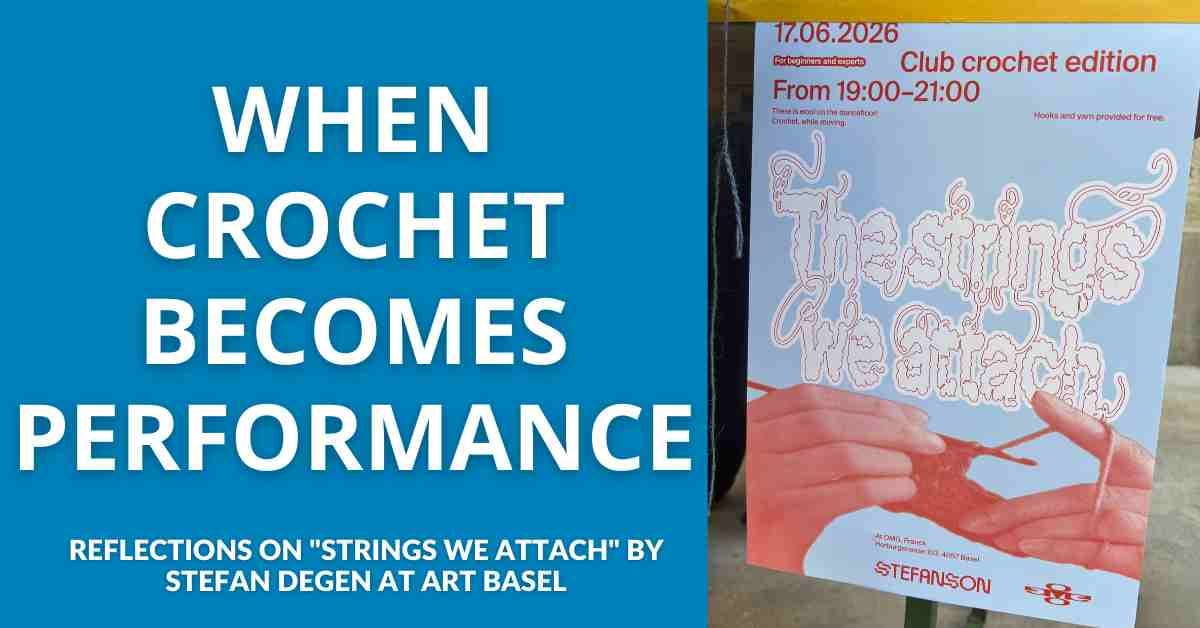
I first discovered Strings We Attach while browsing the Art Basel 2026 programme. Described as a participatory performance combining music, movement, and textile making, it immediately caught my attention. As a crochet designer, I am interested in how textile practices move beyond the domestic or decorative and enter the language of contemporary art.
At the same time, my response to the event was shaped by another layer of experience. Before becoming a crochet designer and blogger, I worked as the director of a contemporary arts and culture centre, where I was closely involved with exhibitions, performance work, and community-based artistic projects. Although my professional focus has shifted, I continue to be interested in how art structures participation, and how audiences become part of the work itself.
It was this intersection that drew me to Strings We Attach. Rather than presenting crochet as a finished object, the work used textile making as an active, shared process unfolding in real time alongside music, movement, and performance.
In this post, I reflect on my experience attending Strings We Attach by Stefan Degen, an Art Basel-listed live intervention curated by Tanzhaus Basel, and what it revealed about crochet as participation within contemporary art.
What Is Strings We Attach?
Strings We Attach was presented during Basel Art Week as part of OMG, Franck! 2026 at the Franck Areal. While it took place in parallel with Art Basel and appeared on the official programme, it was curated by Tanzhaus Basel as a live intervention within a broader constellation of independent cultural events.
The work is structured as a participatory performance in which visitors are invited to move beyond observation and become active contributors. Textile making, sound, and movement unfold simultaneously, creating an environment where participation becomes the primary mode of engagement.
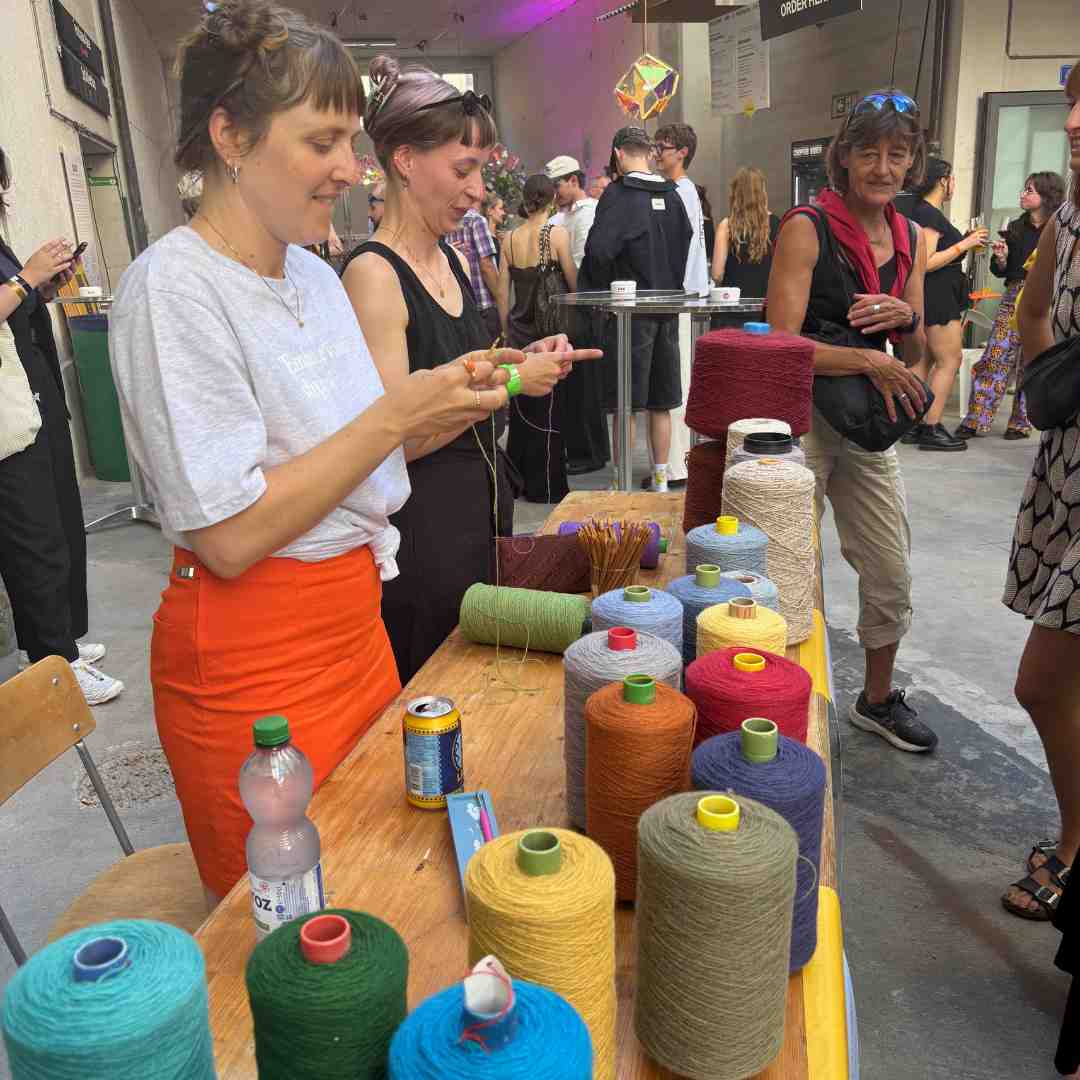
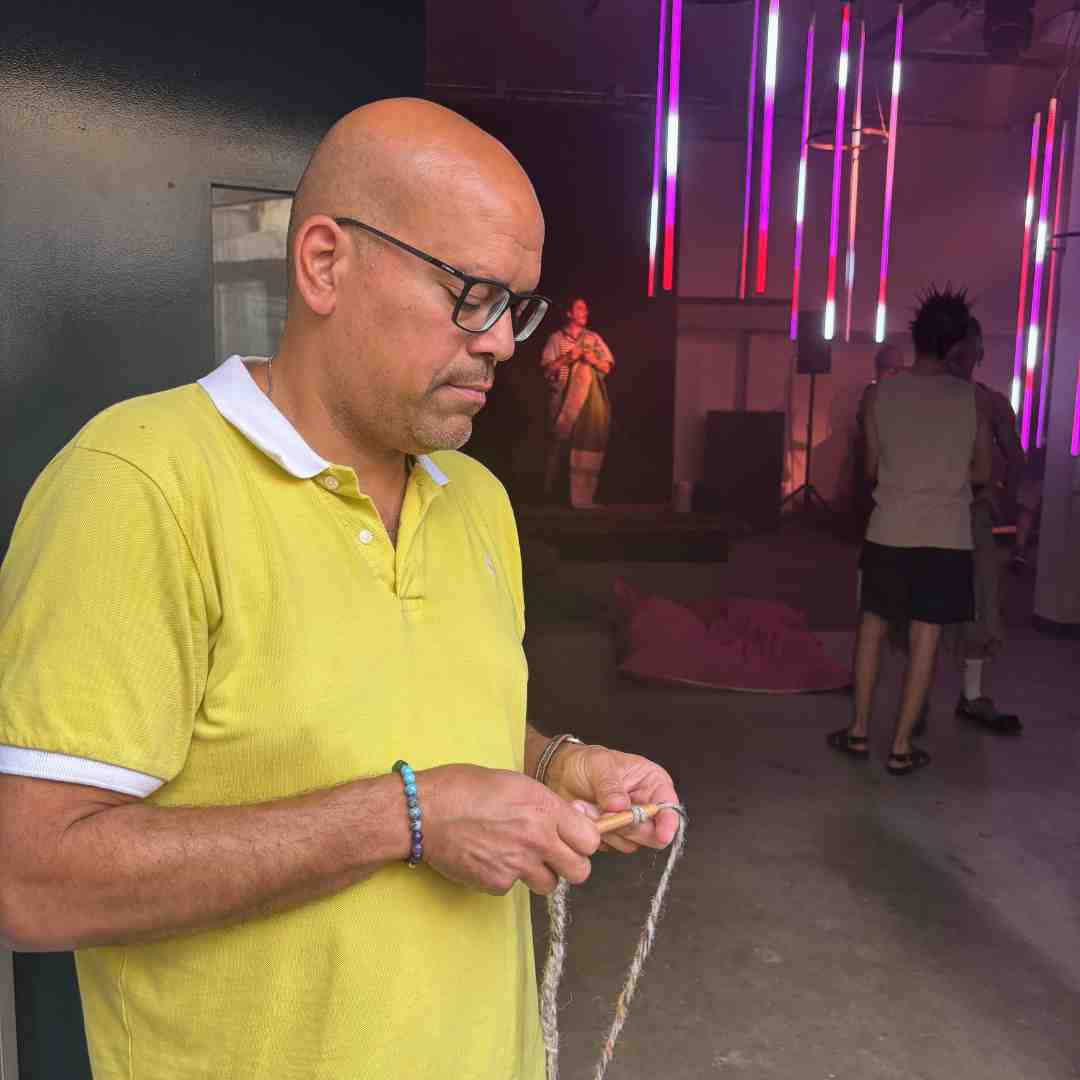
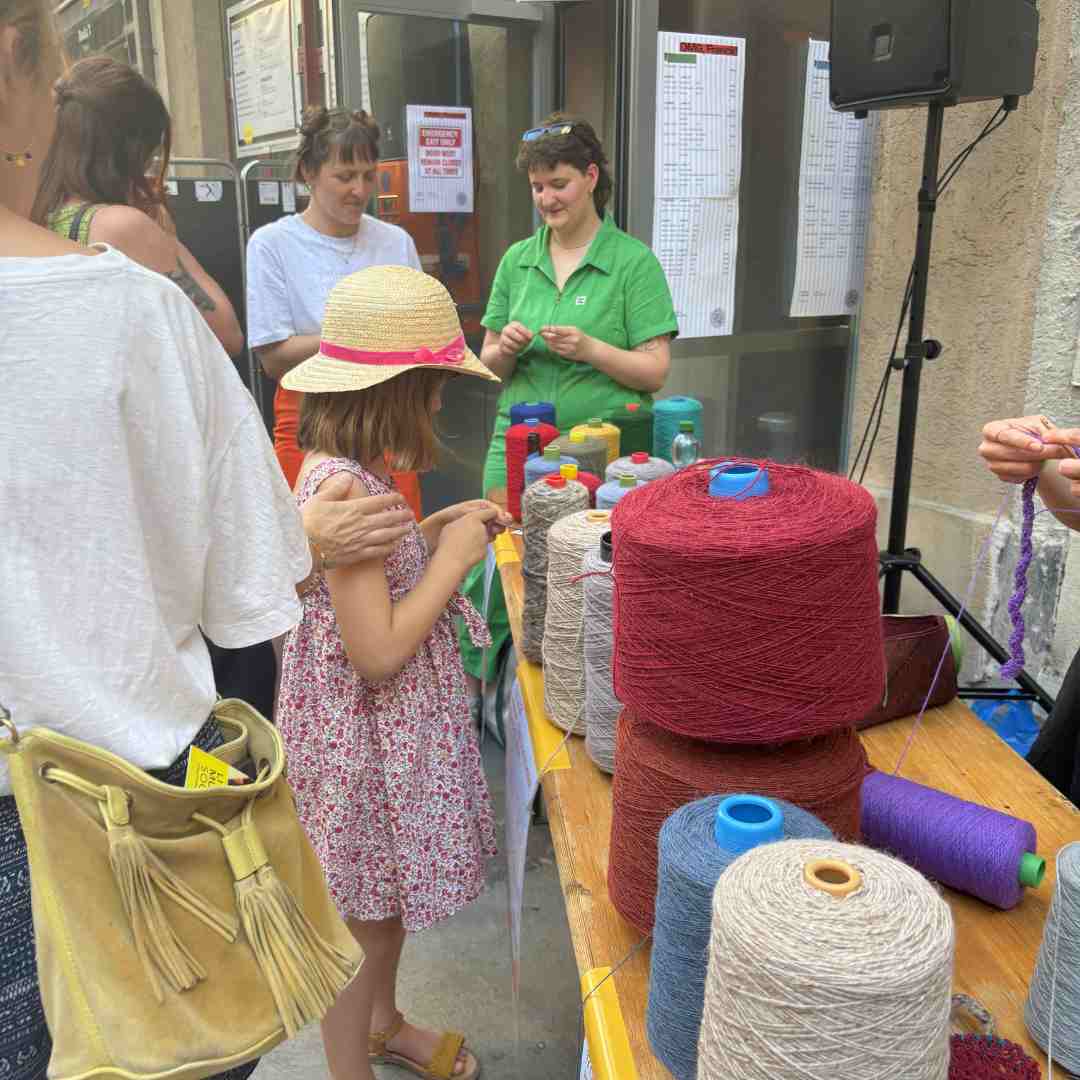
Upon arrival, participants are given yarn, a crochet hook, and a brief introduction to crochet. They then enter the performance space, where they are encouraged to create their own textile pieces while music and performance continue around them.
At the entrance, cones of yarn in different colours were distributed, and participants were shown how to begin with a simple chain stitch. From there, they were free to continue working throughout the duration of the performance (2 hours). The instruction was unhurried and accessible, functioning less as formal teaching and more as an invitation to participate.
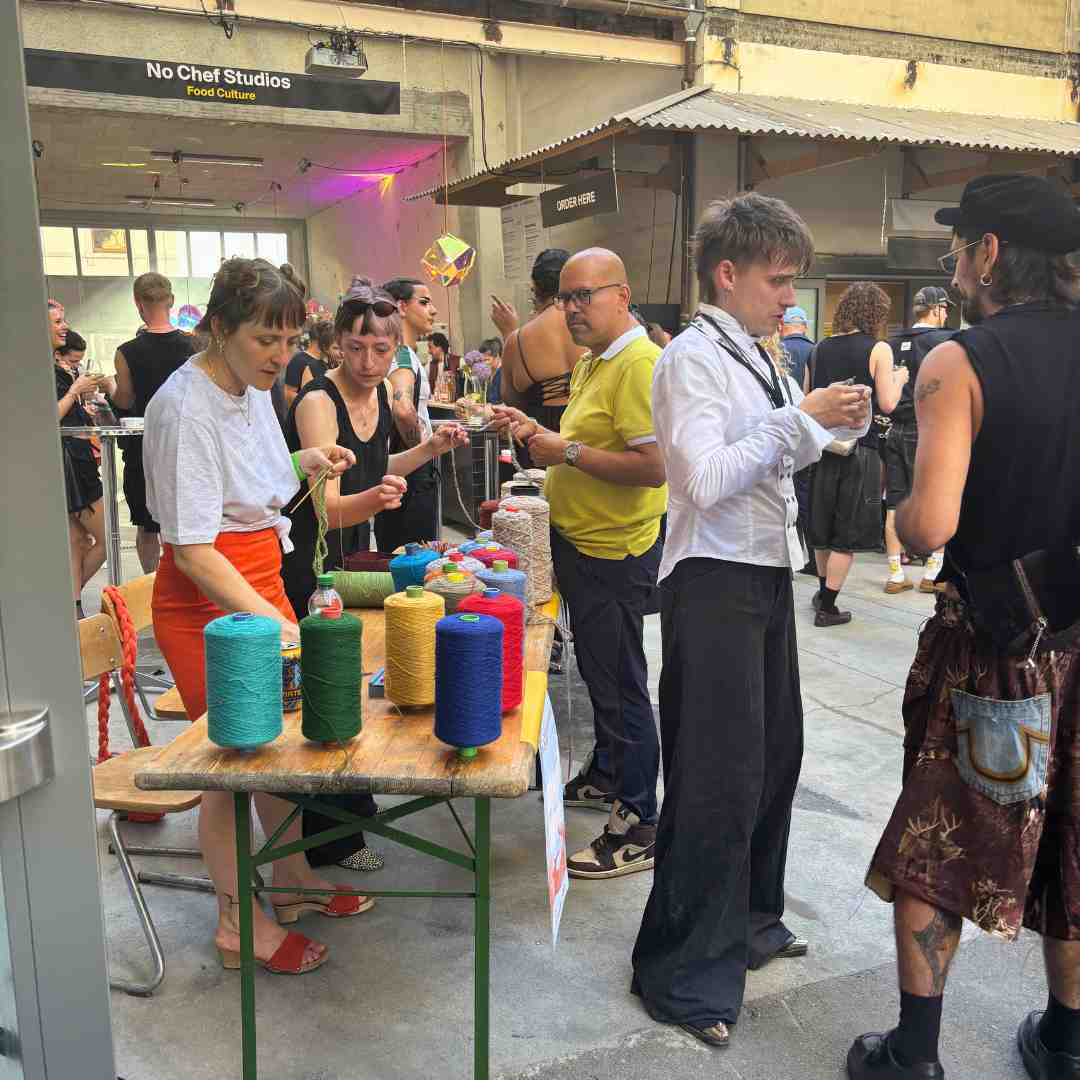
At the entrance of the performance area, visitors could choose a yarn color and crochet hook to work up a crochet piece throughout the 2-hour performance.
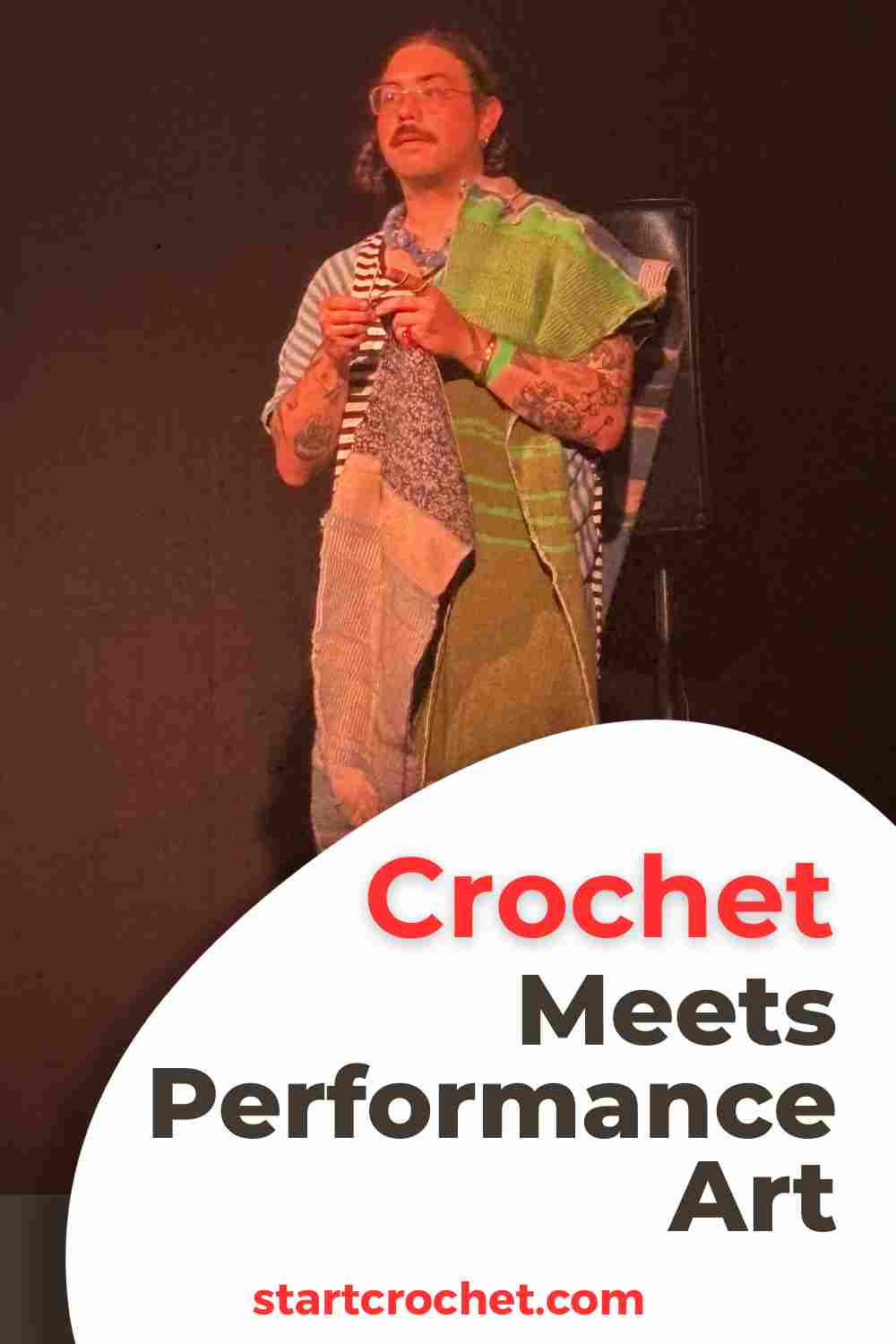
On a small stage, Stefan Degen worked on a long machine-knitted textile piece, extending it with crochet during the performance. Around him, participants of all skill levels experimented with yarn and crochet, with many learning the craft for the very first time.
According to the event description, the individual pieces created throughout the evening have the potential to become part of a larger collective textile work. Participants were given the choice to either keep what they make or donate it to the artist, allowing the final form of the project to emerge through voluntary contribution rather than predetermined outcomes.
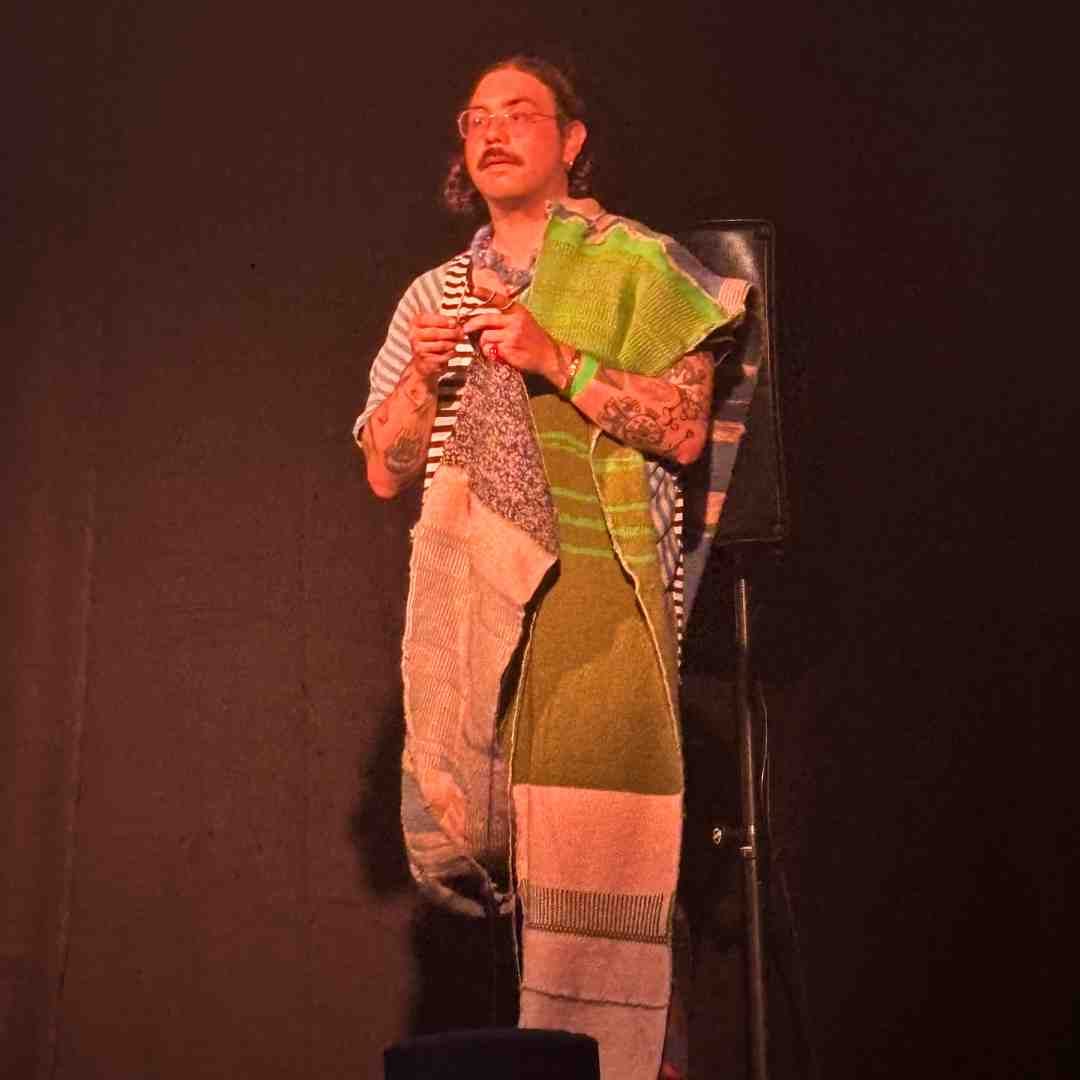
The artist Stefan Degen performing on stage
Inside the Performance: Participation in Practice
The space felt closer to a club environment than a conventional exhibition setting. A DJ played continuously, layering ambient electronic textures, slow club rhythms, and hypnotic soundscapes. The lighting was low and atmospheric, punctuated by flashes of neon, with a light haze from smoke machines that shaped the environment without overwhelming it.
Rather than a fixed audience, people moved fluidly through a wider programme of performances and installations across the venue. Strings We Attach functioned as one temporary stop within a larger field of experiences. Visitors entered, stayed for a while, then moved on. The room never became crowded, which contributed to a sense of openness and ease.
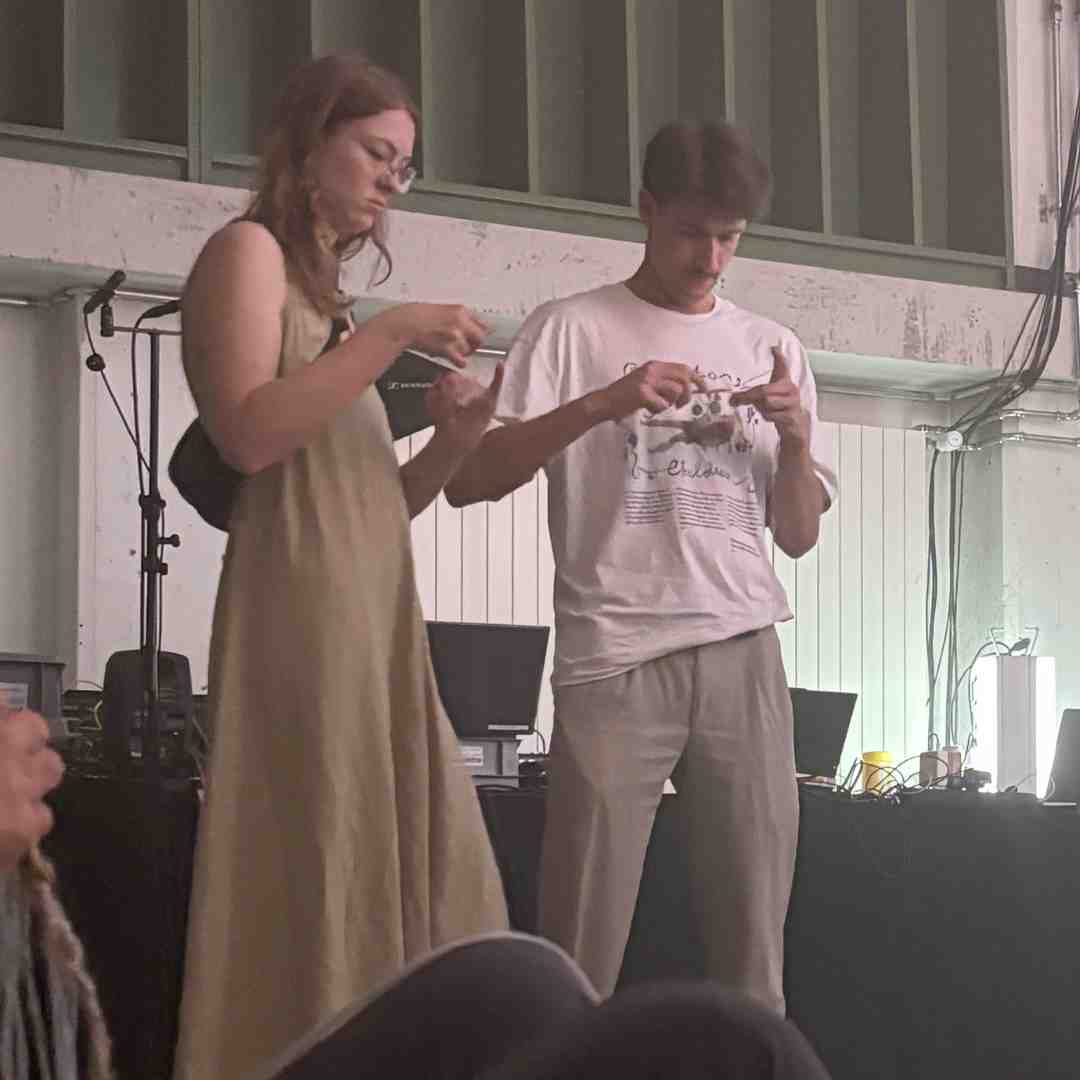
Within this environment, multiple forms of participation coexisted. Some participants sat on bean bags, others danced, and others moved between dancing and crocheting. Some were there primarily for the music and did not engage with the textile element at all, while others arrived specifically to learn crochet and treated the instruction as their entry point into the work.
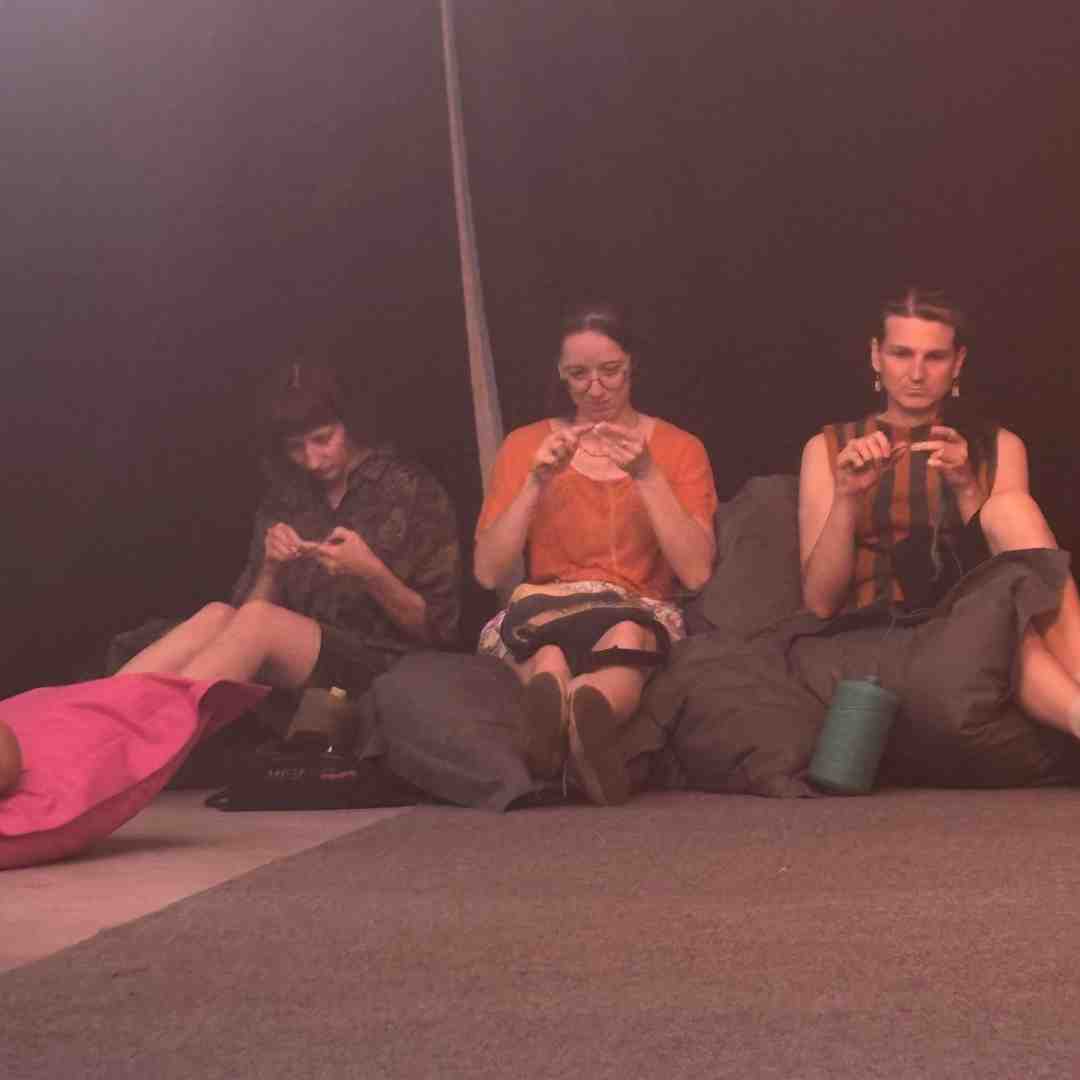
Inside the room, sound and making operated in parallel rather than in direct synchronisation. The music shaped movement and atmosphere, but not the rhythm of crochet itself. I initially attempted to work in time with the beat, but quickly realised this was impractical given the material constraints and the need to continually pull yarn from the cone. The making process followed its own logic.
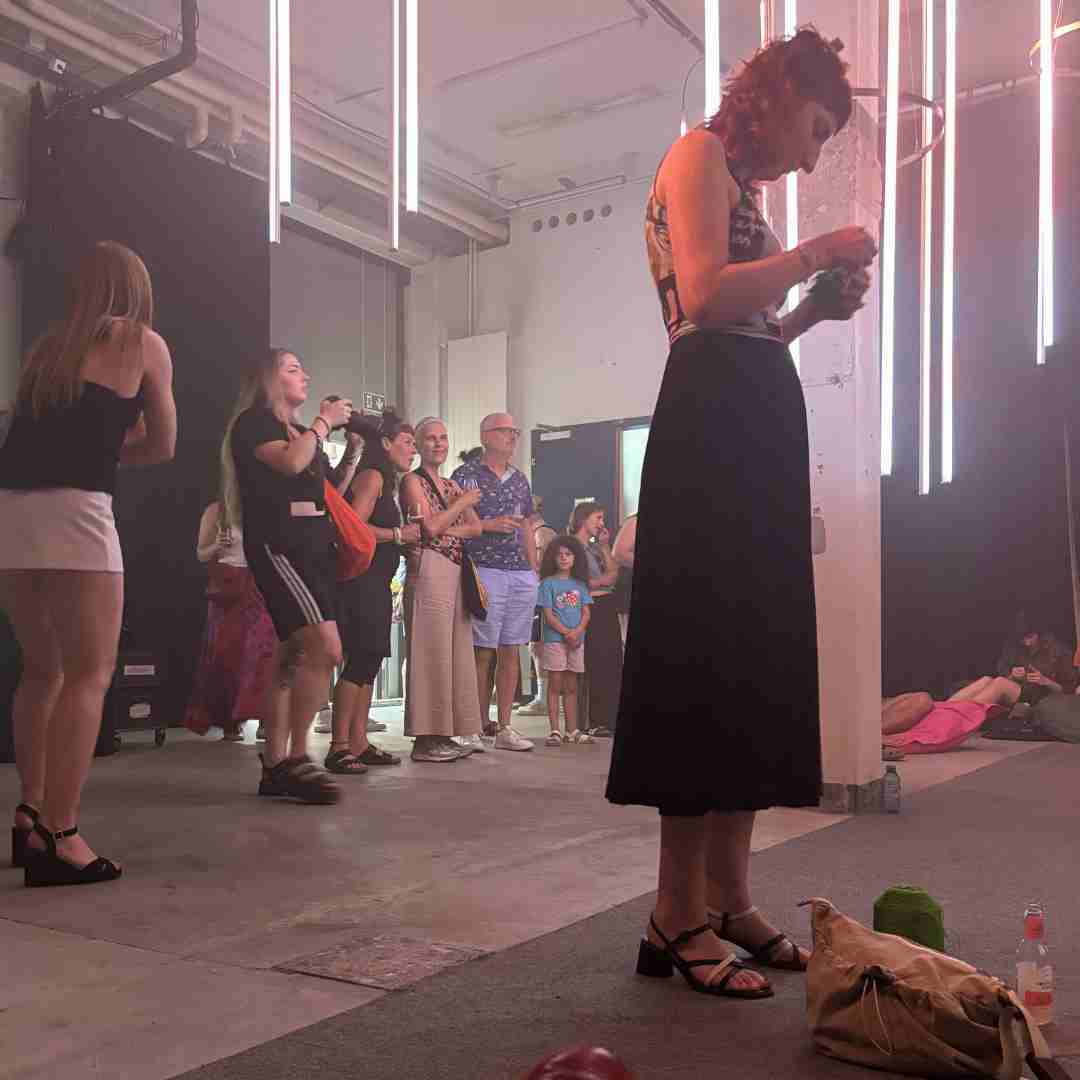
I approached my own piece in a similarly intuitive way. I created a rectangular form in double crochet over approximately twenty-one rows, changing colour every few rows. Later, I added two circular motifs, also in double crochet, each worked over three rounds. The process felt less like experimentation and more like steady accumulation shaped by the conditions of the space and the duration of the performance.
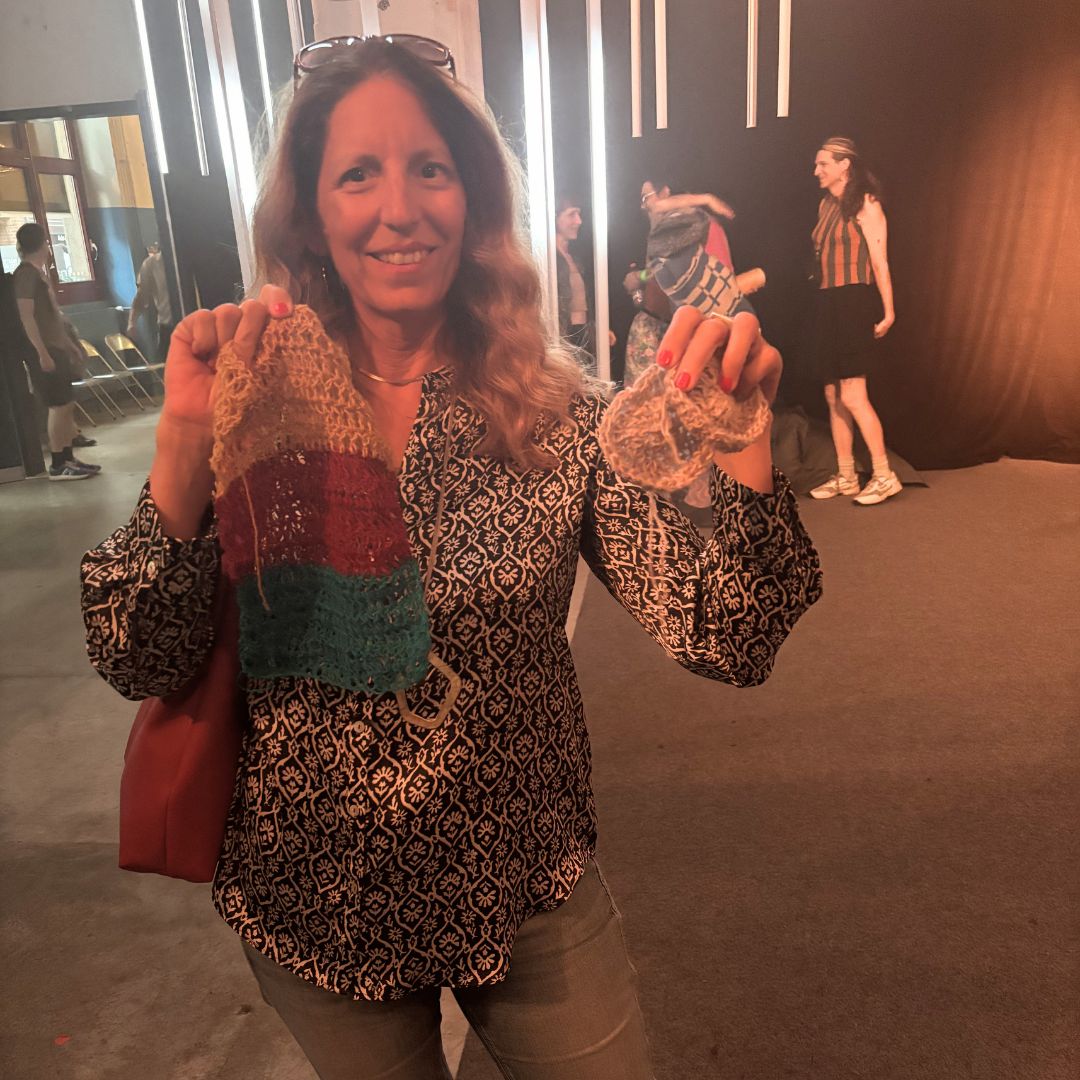
At the end of the two-hour session, I completed the second circle, returned the materials, and donated my work to the artist. Participants were free to keep or contribute their pieces. According to facilitators, donated works may later be incorporated into a larger textile composition, although this remained open-ended at the time of the performance.
What stood out most was the diversity of engagement. Some participants were complete beginners focused on the mechanics of a single stitch. Others worked more independently, already familiar with crochet. Interaction happened sporadically rather than continuously, often in brief exchanges of curiosity or recognition. In one instance, I encountered a participant experimenting with chains to construct a three-dimensional form, which quietly shifted expectations of what the activity might produce.
Before leaving, I briefly spoke with Stefan Degen, mentioning that I had travelled to attend the performance. He responded with warmth and invited me to take a cone of yarn as a gesture. I didn't end up taking one because it's not really a material I typically use. But the exchange reinforced the sense that the work extended beyond the duration of the event itself.
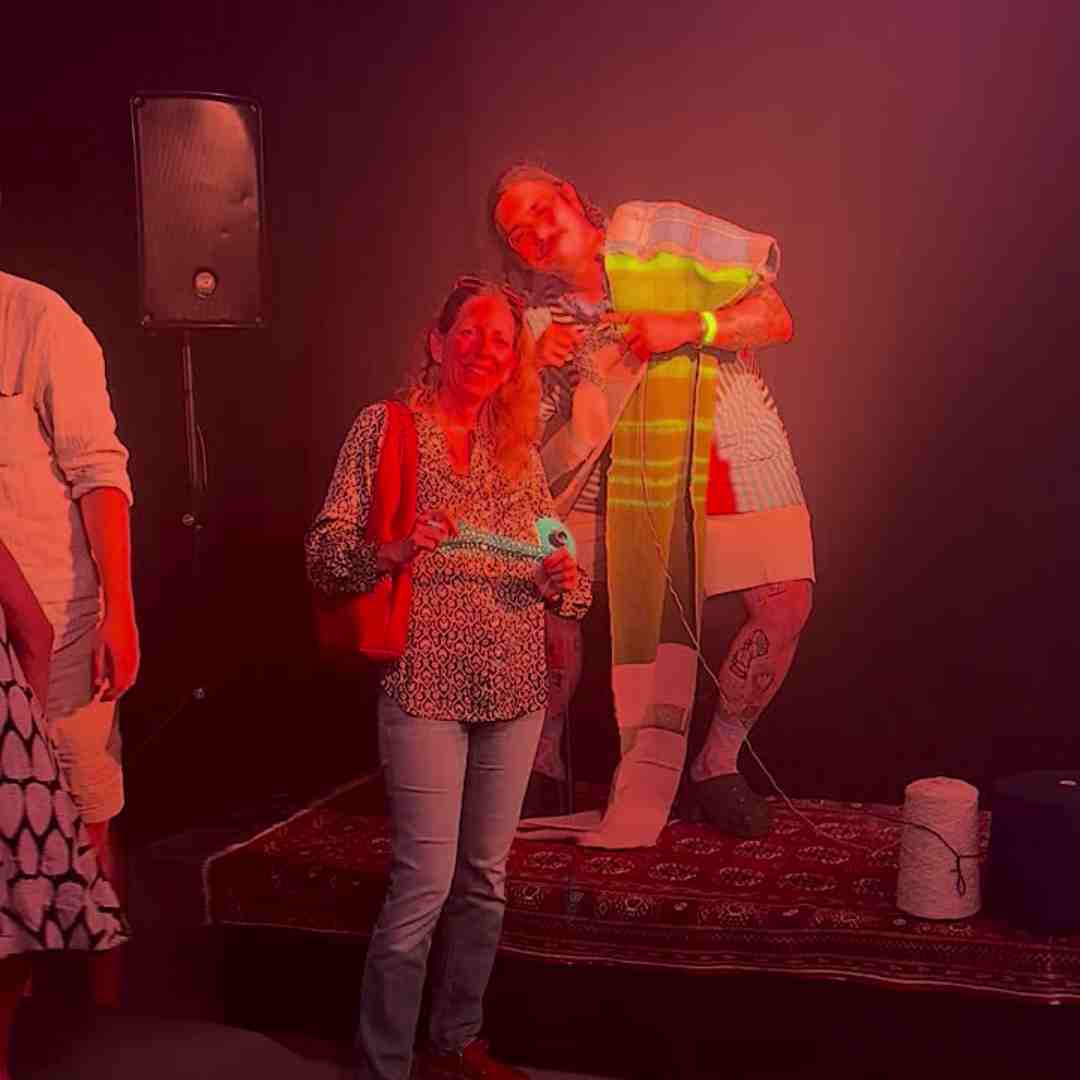
That's me, posing with the artist Stefan Degen
In the end, what remained was not a defined object or resolved outcome, but the experience of participating in a temporary system of making that existed only through collective presence.
So What Was the Artwork?
The question that stayed with me throughout the evening was not simply what was being made, but what kind of work this actually was.
At first glance, it would be easy to assume that the crochet objects themselves were the focus. Yet the situation was more layered. Because participants were making their own pieces while Stefan Degen was simultaneously working on his larger textile form on stage, the individual works existed in parallel rather than as parts of a clearly defined whole.
This creates an ambiguity that resists a single reading. The artwork does not fully reside in the individual objects, nor does it fully reside in the collective outcome, which remained speculative during the performance itself. Instead, it exists across multiple registers: instruction, attention, gesture, sound, and decision-making.
I felt that the option to keep or donate one’s work was quite central here. The potential collective textile object is not guaranteed. It is conditional. It only exists if participants choose to extend their individual gestures beyond themselves. This shifts authorship away from production alone and into the realm of participation and consent.
Perhaps the most productive way to understand the work is not to ask what it produces, but what it temporarily assembles. Not a finished object, but a structure of attention in which making becomes visible as a shared condition rather than a solitary act.
What I Took From This Experience
Walking away from Strings We Attach, I felt a genuine sense of satisfaction at having participated in something that positioned crochet within a contemporary art framework so directly. There was something compelling about seeing the practice displaced from its usual associations and placed into a live, performative context shaped by sound, movement, and collective presence.
What interested me most was not only that crochet was included, but how it was framed. It was not treated as a domestic craft or decorative technique, but as an open system capable of structuring participation. In that sense, the work challenged familiar hierarchies between craft and contemporary art simply by placing them in the same field of attention.
At the same time, I remain slightly uncertain about the depth of the collective outcome as it was experienced in the moment. Much of the participation remained at the level of a single introductory gesture, and the idea of a larger textile assembly existed more as a possibility than as something visibly unfolding. That gap between concept and perception is not necessarily a weakness, but it does shape how the work is encountered.
For my own practice, it reinforced a distinction I already feel strongly about. In community-based crochet projects, I am less interested in performative instruction and more drawn to slower, shared environments where participants can build relationships through sustained making, and later encounter a finished collective work together. For me, the social dimension of crochet lies not only in simultaneous participation, but in continuity over time.
What remains most significant is that crochet was taken seriously here as a medium within contemporary performance, not as illustration or accessory, but as a structural component of participation itself. The work did not resolve into a single object or message. Instead, it held open a space in which making, watching, and being present briefly converged.
In that sense, Strings We Attach does not sit comfortably as either craft project or performance. It occupies a more uncertain space, where the value of the work is located less in what is produced, and more in how participation temporarily reorganizes the relationship between people, materials, and attention.
After Publishing This Article, I Heard Back from Stefan Degen
After I shared my blog post with Stefan Degen, he sent me a thoughtful message explaining more about the story behind Strings We Attach. Reading it gave me a deeper understanding of the performance and the reasons why crochet plays such an important role in his work.
One thing that surprised me was learning that Stefan only returned to crochet a few years ago. Growing up in a conservative household, he felt that crochet was not something boys were supposed to do, despite being good at it and enjoying it. Years later, a friend offered him a crochet hook, knowing he had a complicated relationship with the craft. After taking it home, he found himself unable to stop thinking about all the things he wanted to make. Before long, crochet had become a central part of his creative practice.
As his confidence grew, so did his willingness to crochet in public. He told me that he would crochet everywhere, on trains, at concerts, and in everyday situations. While many people responded positively, not everyone understood it. One experience that stayed with him happened at a concert when a stranger became angry and told him that if he wanted to crochet, he should go home and do it there rather than in a place where people came to enjoy music.
Later that same evening, another person had the exact opposite reaction. She told him that seeing someone crochet in that environment made her feel calm and safe and that she wished she had the confidence to crochet wherever she wanted. These contrasting reactions became part of what inspired his artistic practice.
After we exchanged messages, I realized that the combination of crochet and club culture that I experienced during Strings We Attach was not accidental. Stefan is interested in questioning assumptions about gender, craft, and where certain activities "belong." By bringing crochet into unexpected spaces, he creates situations where those assumptions become visible.
He also shared a story from an earlier version of the project that particularly resonated with me. During a previous presentation, people who had only just learned a basic stitch began helping others who were struggling. For him, these moments of connection are at the heart of the work.
The title Strings We Attach is both literal and metaphorical. Yes, people are making physical strings with yarn, but they are also creating connections with one another. Some participants may go home and buy their first crochet hook. Others may never crochet again. Some may never see each other after the event. Yet something has still been shared.
One sentence from Stefan's message stayed with me:
"The performance is the experience itself."
Looking back, that idea helped me understand the work differently. Perhaps the crochet pieces, the music, the dancing, and the conversations were never meant to lead to a single finished outcome. Perhaps the artwork existed in the temporary space created between all of those things and the people who came together to experience them.
Final Thoughts
What happens when crochet leaves the living room, yarn shop, or craft fair and enters a performance space?
Can a simple chain stitch become part of a contemporary artwork, even when created by someone who has never crocheted before?
Is the artwork the textile object itself, the collective process of making it, or the conversations and encounters that emerge along the way?
And perhaps most importantly, how might crochet continue to evolve as an artistic medium when artists, makers, and communities begin exploring it beyond its traditional boundaries?
I'd love to hear your thoughts. Do you see crochet as a craft, an art form, a tool for community building, or perhaps all three? Have you ever encountered crochet in a gallery, performance, or other unexpected setting? Share your experiences and perspectives in the comments below.
Continue Exploring Crochet as Art and Community
Attending Strings We Attach reinforced many of the ideas I've been exploring recently about crochet's place beyond traditional craft spaces. From collaborative textile projects to contemporary art installations, crochet continues to find new ways of bringing people together and encouraging participation.
If you're interested in these themes, you may also enjoy:
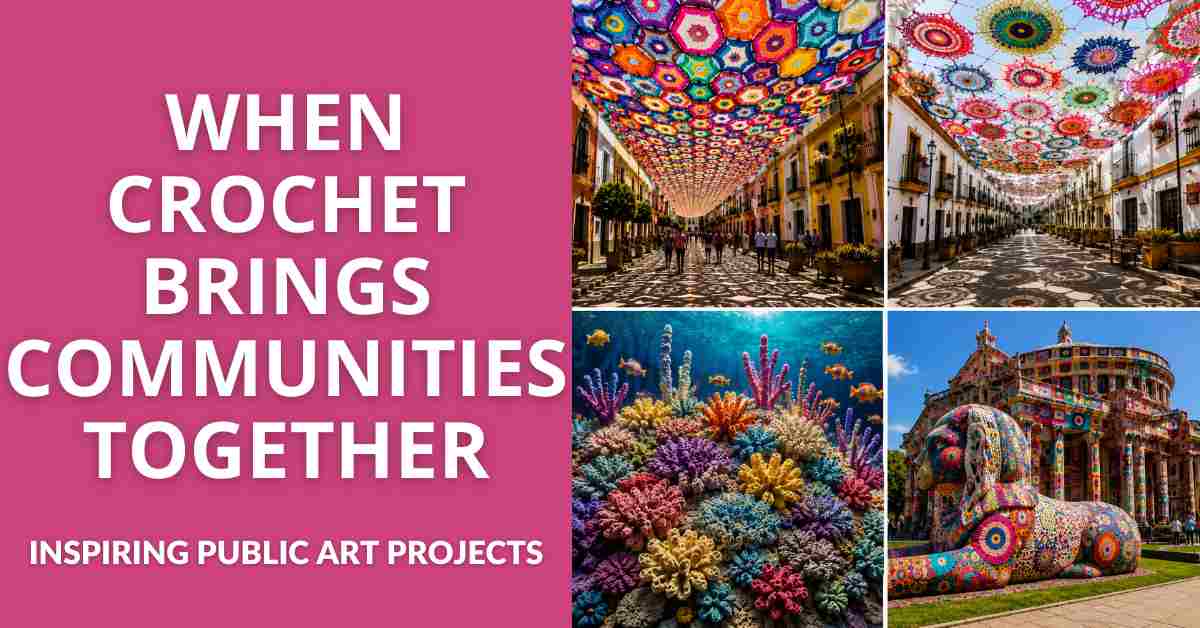
Community Crochet Projects: Bringing People Together Through Stitching – a look at collaborative crochet initiatives and how collective making can create connections, shared experiences, and meaningful public artworks.
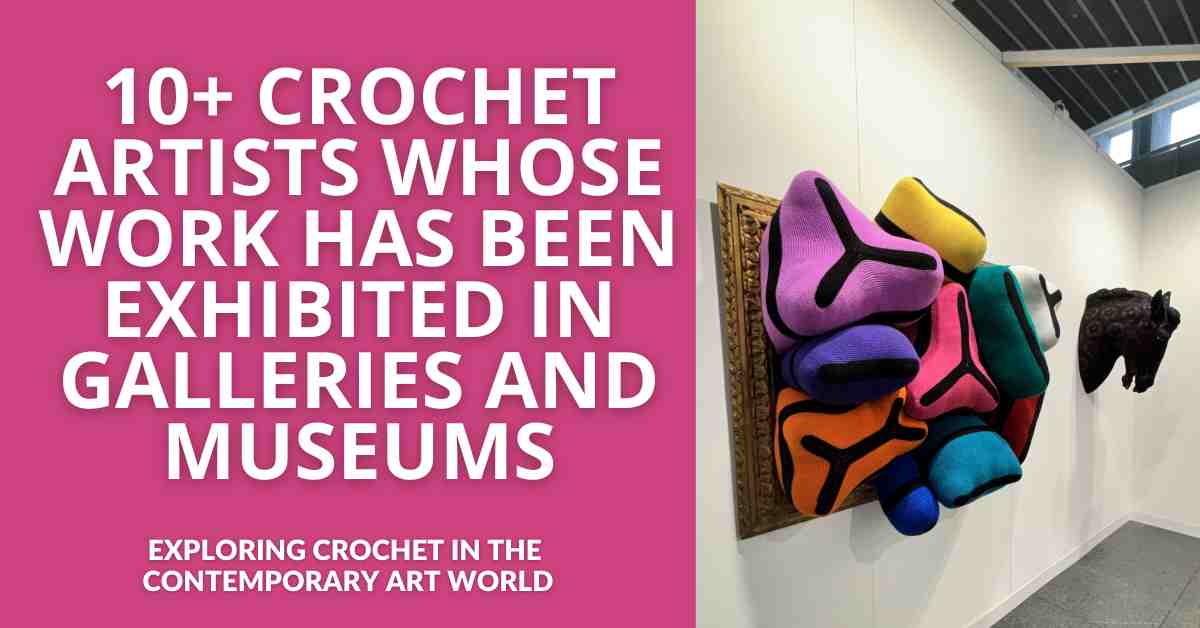
Crochet Artists Redefining Fiber Art – an exploration of artists who use crochet as a medium for contemporary art, challenging assumptions about what crochet can be and where it belongs.
I hope you enjoyed reading this post. Sign up to my newsletter as I continue exploring the fascinating ways crochet intersects with contemporary art, community projects, and creative expression.
If you're passionate about community crochet, public art, or simply the idea of creating something meaningful together, join the email list to be the first to hear about upcoming collaborative crochet projects.
Help Create Something Bigger Than a Granny Square
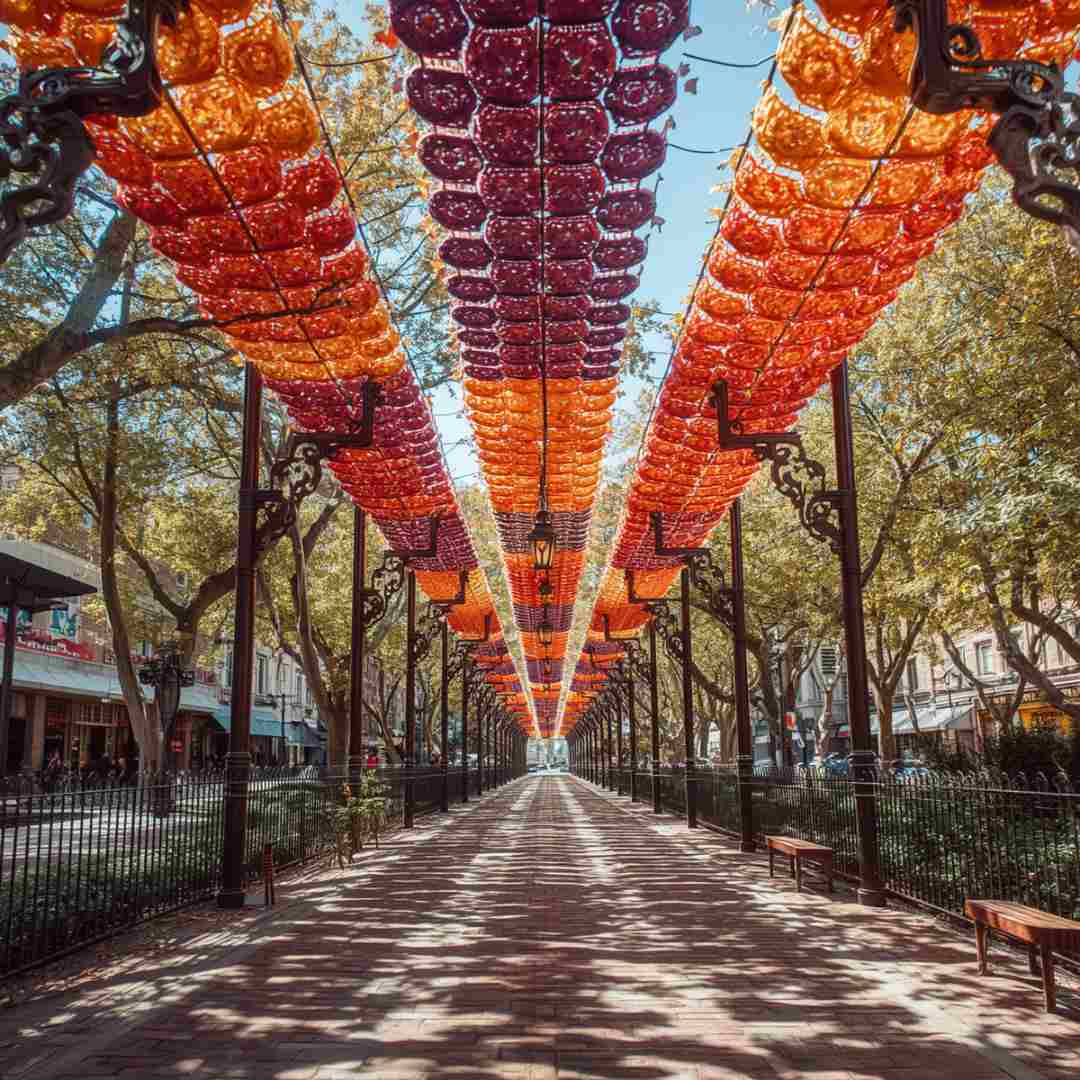
Imagine contributing a single crochet motif that becomes part of a giant public art installation, a colorful street canopy, or a collaborative project spanning multiple countries.
Join the waiting list to hear about community crochet projects and opportunities to collaborate with fellow crocheters around the world.
Let's Keep in Touch :)
You May Also Like

About the Author
May
Follow me on socials here: